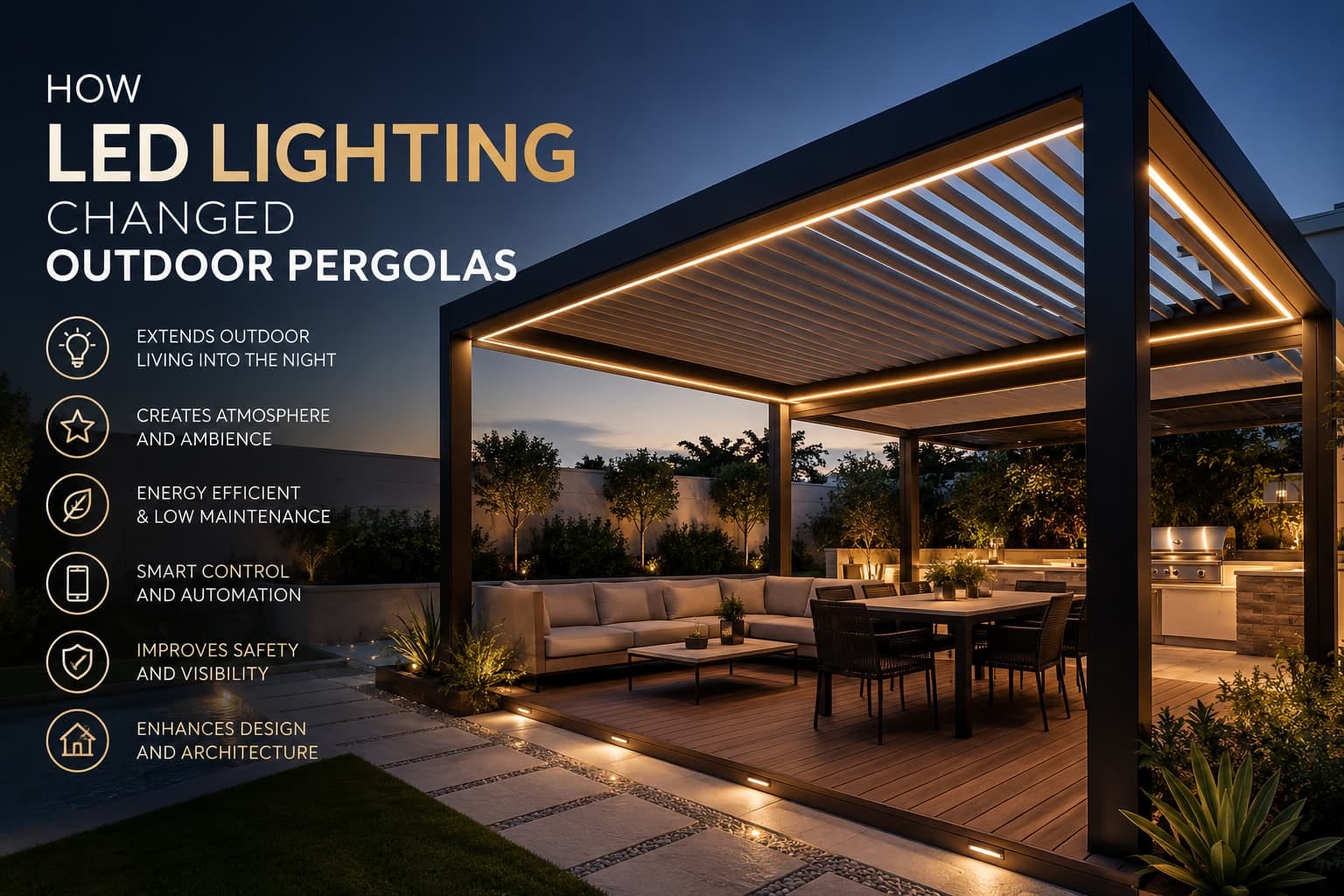
How LED Lighting Changed Outdoor Pergolas

Outdoor pergolas have evolved far beyond simple shade structures. What was once primarily a daytime outdoor feature has now become a true extension of the home — a place for dining, entertaining, relaxing, and even working after sunset. One of the biggest factors behind this transformation has been the rise of integrated LED lighting systems.
Modern pergolas are no longer just about shelter from the sun or rain. Lighting has become a major part of the overall outdoor experience, helping create atmosphere, functionality, safety, and architectural impact. In many ways, LED technology has completely changed what people expect from outdoor living spaces.
Pergolas Are No Longer Daytime-Only Spaces
Traditionally, outdoor pergolas were heavily dependent on daylight. Once evening arrived, many outdoor areas became underused due to poor lighting, cold ambience, or impractical setups involving portable floodlights or temporary fixtures.
LED lighting changed that completely.
Integrated lighting systems now allow pergolas to function seamlessly from day into night. Outdoor dining, late-night entertaining, sports viewing, relaxing with family, or hosting guests has become far more practical and visually appealing.
This shift has helped outdoor spaces become a genuine “second living room” rather than a seasonal or occasional-use area.
The Rise of Integrated Pergola Lighting
One of the major changes in the market has been the movement away from aftermarket lighting solutions.
Earlier pergola systems often required:
External electricians adding fittings afterward
Visible cables and conduit
Surface-mounted floodlights
Limited placement options
Lighting that looked disconnected from the structure itself
Modern pergolas now commonly include fully integrated LED systems built directly into:
Surround beams
Louvres
Ceiling sections
Side channels
Posts and framework
This creates a much cleaner and more architectural appearance.
Systems such as the Cerberus Plus and Orion ranges from Apollo NZ have helped popularise this approach by integrating lighting into the pergola design itself rather than treating it as an add-on.
Creating Atmosphere and Mood
Perhaps the biggest impact of LED lighting is how dramatically it changes the atmosphere of an outdoor space.
Lighting affects:
Warmth
Comfort
Perceived luxury
Visibility
Ambience
Architectural definition
Soft warm-white LED strips can create a calm resort-style setting, while brighter functional lighting supports outdoor kitchens, dining tables, and entertainment areas.
Some systems now include:
Dimmable lighting
Zoned lighting control
RGB colour-changing options
Smart app integration
Voice control compatibility
This flexibility allows homeowners to completely alter the feel of the same space depending on the occasion.
A pergola used for family dinners can instantly transform into an entertainment area for guests or a quiet evening retreat.
The Impact on Architectural Design
LED lighting has also changed the way pergolas are designed architecturally.
Modern outdoor structures are increasingly designed with lighting in mind from the very beginning.
Architects and designers now consider:
Light flow
Shadow lines
Reflection
Feature illumination
Night-time appearance
Visual framing of outdoor zones
Integrated lighting can highlight:
Louvre blade geometry
Ceiling textures
Outdoor kitchens
Pool areas
Landscaping
Pathways and decks
This creates a far more premium and intentional appearance compared to older outdoor structures that relied on standalone lights mounted externally.
The result is a cleaner, more refined outdoor environment that feels connected to the home itself.
Energy Efficiency Changed Everything
Another reason LED lighting transformed pergolas is efficiency.
Older outdoor lighting systems often consumed large amounts of power and generated excessive heat. LEDs introduced:
Low power consumption
Long operating life
Minimal maintenance
Reduced heat output
Better weather resistance
Improved reliability
This made it practical to run lighting for long periods without major energy concerns.
For modern outdoor living, this is important because pergolas are now expected to function regularly throughout the evening rather than only occasionally.
Smart Outdoor Living
The growth of smart home systems has accelerated LED adoption even further.
Many modern pergola systems now integrate with:
Tuya Smart systems
Mobile apps
Timers and schedules
Voice assistants
Automated scenes
This means users can:
Turn lights on remotely
Adjust brightness
Set evening schedules
Sync lighting with entertaining areas
Combine lighting with motorised louvre operation
Outdoor spaces are becoming increasingly automated and connected.
This trend mirrors what has already happened inside modern homes, where lighting is no longer simply functional but part of a larger smart-living ecosystem.
Commercial Spaces Adopted the Trend Quickly
Restaurants, bars, hospitality venues, and event spaces were among the first industries to heavily embrace integrated pergola lighting.
For hospitality businesses, LED-lit pergolas helped:
Extend trading hours
Improve outdoor ambience
Increase usable seating space
Create premium outdoor environments
Enhance social-media-friendly aesthetics
This has been particularly noticeable in:
Rooftop bars
Restaurants
Hotel pool areas
Outdoor dining precincts
Entertainment venues
The hospitality industry helped push pergola lighting from a luxury feature into a mainstream expectation.
Safety and Visibility Improvements
Lighting is not only about aesthetics.
Integrated LED systems also improve:
Walkway visibility
Step illumination
General outdoor safety
Visibility during storms or poor weather
Access around pools and decks
This is especially important in New Zealand conditions where outdoor entertaining often continues through changing weather and darker winter evenings.
Well-designed pergola lighting can improve usability while also reducing harsh glare or uneven shadows common with traditional floodlights.
The Future of Pergola Lighting
LED technology continues to evolve rapidly.
Future pergola lighting trends are likely to include:
More advanced automation
Motion and occupancy sensing
Solar-assisted systems
Integrated audio and lighting environments
Dynamic scene programming
Energy-monitoring integration
Greater customisation of colour temperatures
We are also seeing lighting become increasingly subtle and architectural, with hidden light sources designed to create indirect glow rather than obvious fixtures.
The goal is shifting from simply “adding light” to designing complete outdoor experiences.
Final Thoughts
LED lighting fundamentally changed outdoor pergolas by transforming them from simple shade structures into true day-and-night living environments.
What began as a practical lighting upgrade has become a major part of outdoor architecture itself.
Today’s pergolas are expected to provide:
Shelter
Comfort
Smart functionality
Entertainment capability
Architectural appeal
Night-time usability
Integrated LED systems sit at the centre of that evolution.
As outdoor living continues to grow globally, lighting will remain one of the defining features shaping how people design, experience, and use modern pergola spaces.